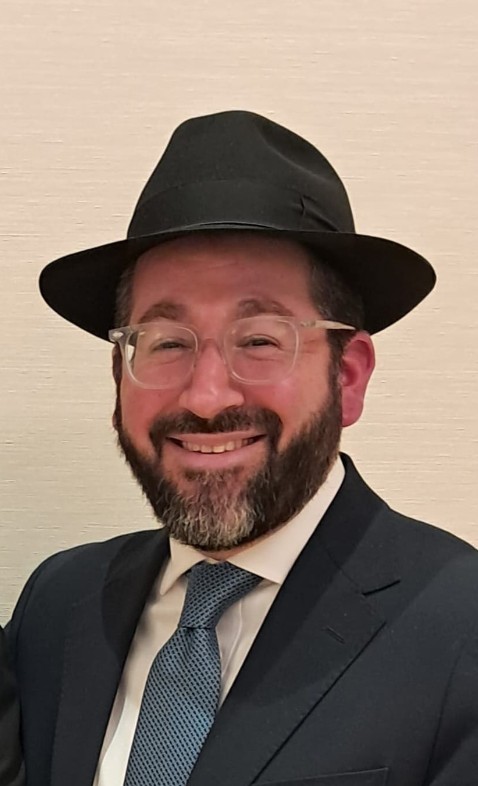
BJH: Thank you for interviewing today.
Yury Malachevsky: It is my privilege to speak with you.
BJH: We understand that your medical experience is rooted in years of primary care. How did you make this transition to psychiatry?
YM: After seeing so many patients struggling with mental health needs day after day with almost nowhere to direct them for support, it became my passion to strengthen this area of medicine in my primary care practice. I was also a professor at Johns Hopkins University for 6 years, and my colleagues and students shared the same struggle with me. With time, the need for this support further increased, and I felt strongly that I needed to dedicate myself to this specialty. After speaking with my Rov, Rabbi Yosef Berger, I enrolled in and completed a strong psychiatry program through the University of Cincinnatti. Most of my training was completed in rotations with a brilliant, patient, and supportive psychiatrist named Dr. Desmond M. Kaplan. Dr. Kaplan has served in psychiatry for 30 years and imparted in me the knowledge, skill, and sensitivity to serve in this privileged role. He was the driving force for me to start my own practice. We are still very close and he serves as my collaborating expert if a need arises.
BJH: What makes your practice unique?
YM: My 12 years of experience in primary care prepared me with 3 advantages:
- I have the training to see the totality of a person’s medical and psychological needs and appreciate the whole synthesis of their experience rather than just a fragment of their struggle.
- I know that medical and psychological needs are inseparable. I never felt that Hypertension is my patient’s fault and I feel very strongly that depression is also not my patient’s fault. The rightful place of mental health practice belongs in the space of a medical office rather than in an independent disconnected place. Understanding this will reduce the stigma of requiring mental health support. In the waiting room of my practice, there are patients seeing primary care, cardiology, hematology, and podiatry. No one knows what the next person’s needs are and my hope is that stigma will be removed.
- My initiation into medicine was founded on the desire to provide care for every individual who needs it. Therefore in primary care, accepting insurance is natural and essential. Now that I am practicing psychiatry, this will not change. I accept BlueCross, Cigna, Aetna, United Healthcare, Medicaid, Wellpoint, and Medicare.
BJH: What population will you serve and what conditions will you treat?
YM: I will see adolescents to adults, which essentially means 12 years and above. The conditions treated will include adjustment disorders, addiction disorders, eating disorders, anxiety disorders, attention deficit & hyperactivity disorder, bipolar disorder, depressive disorders, obsessive-compulsive disorders, personality disorders, schizophrenia spectrum disorders, sleep disorders, and trauma-related disorders. My focus is on the medical intervention for these disorders.
BJH: If there would be one fundamental therapeutic concept that you would like people to take to heart, what would that be?
YM: I feel that one of the most fundamental concepts that we must take to heart is that our past and the impression of others does not define us. Whether it is past traumatic experiences, failed achievements, or impression that we have made on others. None of these must define us or tell us that this is the totality of what we are and limit what we can achieve. No one’s impression defines who we are. Only Hashem can define and limit us, and His knowledge and trust in our ability is beyond what anyone can imagine. The only thing that can limit us is our own self-doubt. Even past failures do not stop our ability to overcome our limitations, passions, or improper middos. This is the essential lesson of teshuva- that we can change in the most absolute and permanent way and be completely separate from the person that once existed.
BJH: Would you like to share anything else?
YM: I want to thank my wife, parents, parents-in-law, Dr. Kaplan, and my dear colleagues, Dr. Yaakov Berger and Dr. Jeffrey Banker whose friendship and support made this possible.
Dr. Malachevsky is welcoming new patients in May 2026 for in-person and telemedicine appointments. The office information is:
Baltimore Wellness
2835 Smith Avenue, Suite 207, Baltimore, MD 21209
(P) 443-929-4853
(F) 667-249-3995
contact@bwpsychiatry.com