By: Meira Berendt
Bais Yaakov of Baltimore helps students reach their potential with well-developed classes, a wide variety of school activities, and of course, devoted teachers and administration. Complementing a robust academic curriculum, Bais Yaakov is constantly implementing new programming designed to develop the whole child, broaden horizons and encourage natural talent. With this in mind the upper middle school recently added two new electives and a special new program to their repertoire.
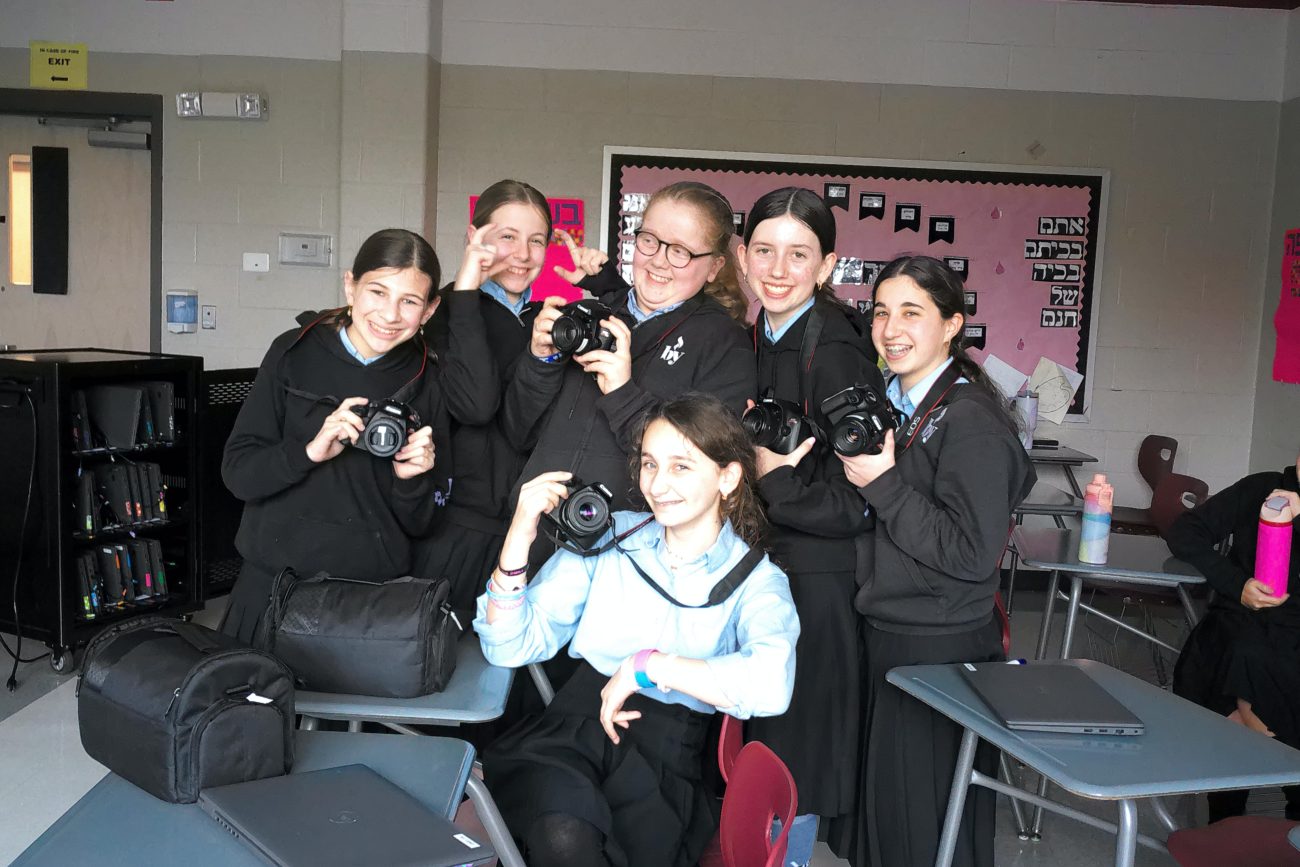
In the eighth grade, Bracha Benyowitz, a professional photographer, is sharing her skill with the girls. Each student is given a camera to use throughout the course. Starting with the basics, the girls learn the different parts of a professional camera and how to care for it. Then, they are taught a wide variety of photography concepts: white balance, depth, aperture, iso, shutter speed – all very advanced and complicated ideas.
Miss Benyowitz is sure to tell me, “I don’t teach them numbers to memorize, I show them diagrams and teach them the reasons behind all the different concepts.” The girls gain sensitivity for good lighting, coloring, and posing. The elective is a creative outlet which challenges them to think in new ways.
“There are so many calculations that go into taking a good picture, you’d never know without learning it,” Miss Benyowitz adds. “The girls have shared that their pictures have improved – even on a regular camera. A student told me she was very proud of the pictures she took at her brother’s upsherin.”
And do the girls enjoy the class? “Absolutely,” Miss Benyowitz responds. “Although I only have them, sadly, for one semester, I really get to know the girls and enjoy teaching them.”
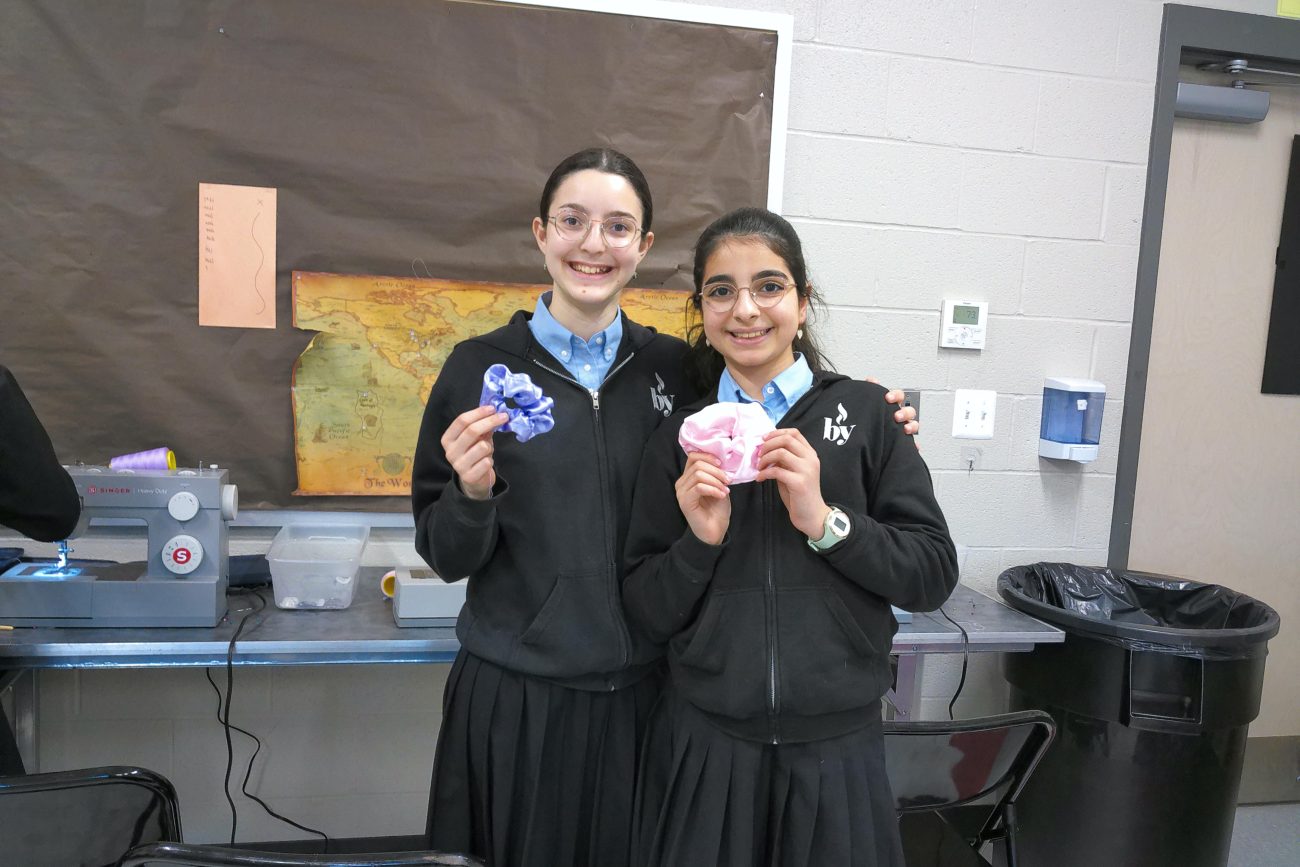
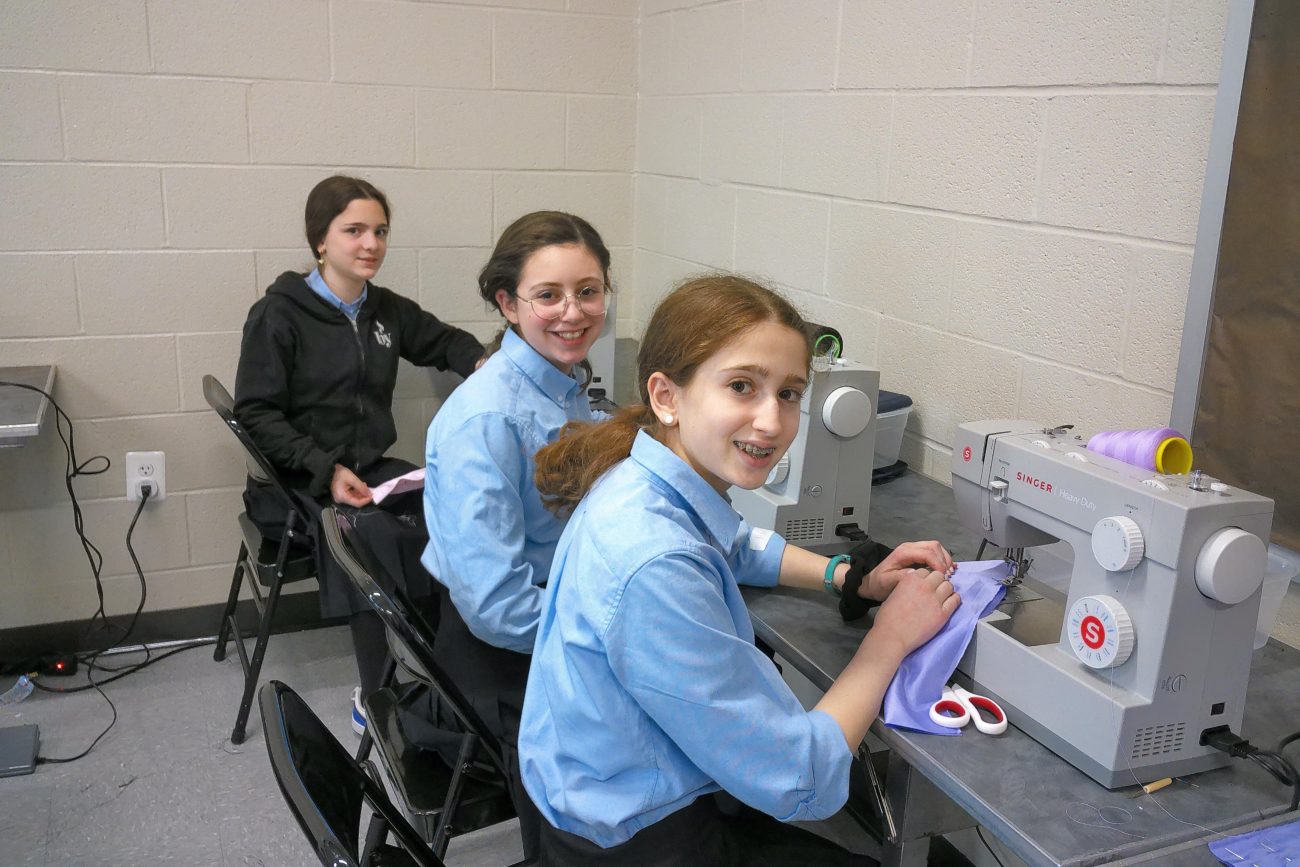
The seventh grade’s newest elective is sewing. Its teacher, Rivka Rachel Danesh, a seamstress herself, shares that at the start of the semester, the girls learn how to thread a needle and sew buttons. From there, they quickly advance to learning the ins and outs of a sewing machine, which they use to sew pillows and A-line skirts.
“It’s a great skill that gives the girls an understanding of their own clothes,” Miss Danesh tells me. “Clothes don’t just appear. The girls come to understand that there is a whole process: measuring, chalking, pinning, etc.”
Imagine a button popping off a shirt – normally one would take it to the seamstress. Now, the girls know exactly what to do. Do the girls appreciate the class? Miss Danesh tells me the answer is a resounding yes. “The girls enjoy this outlet in school – learning a new skill that’s practical. I’m not saying to them, ‘Copy this into your notes, it will be on a test.’ Instead, it’s: ‘We’re making a skirt – and you’re going to wear it. Make it in a way that you like.’ They enjoy being creative and independent.” The girls also appreciate taking home something tangible. I was told most of them keep their pillows on their beds!
I asked Miss Danesh if she enjoys teaching the course. “I love it! I love the fact that I can really connect with the girls because it is such an interactive class. I feel like I really get to know each student and what she’s all about.”
Complementing the electives is a beautiful new seventh grade initiative coordinated by Mrs. Nusi Lefkovitz, seventh grade mechaneches.
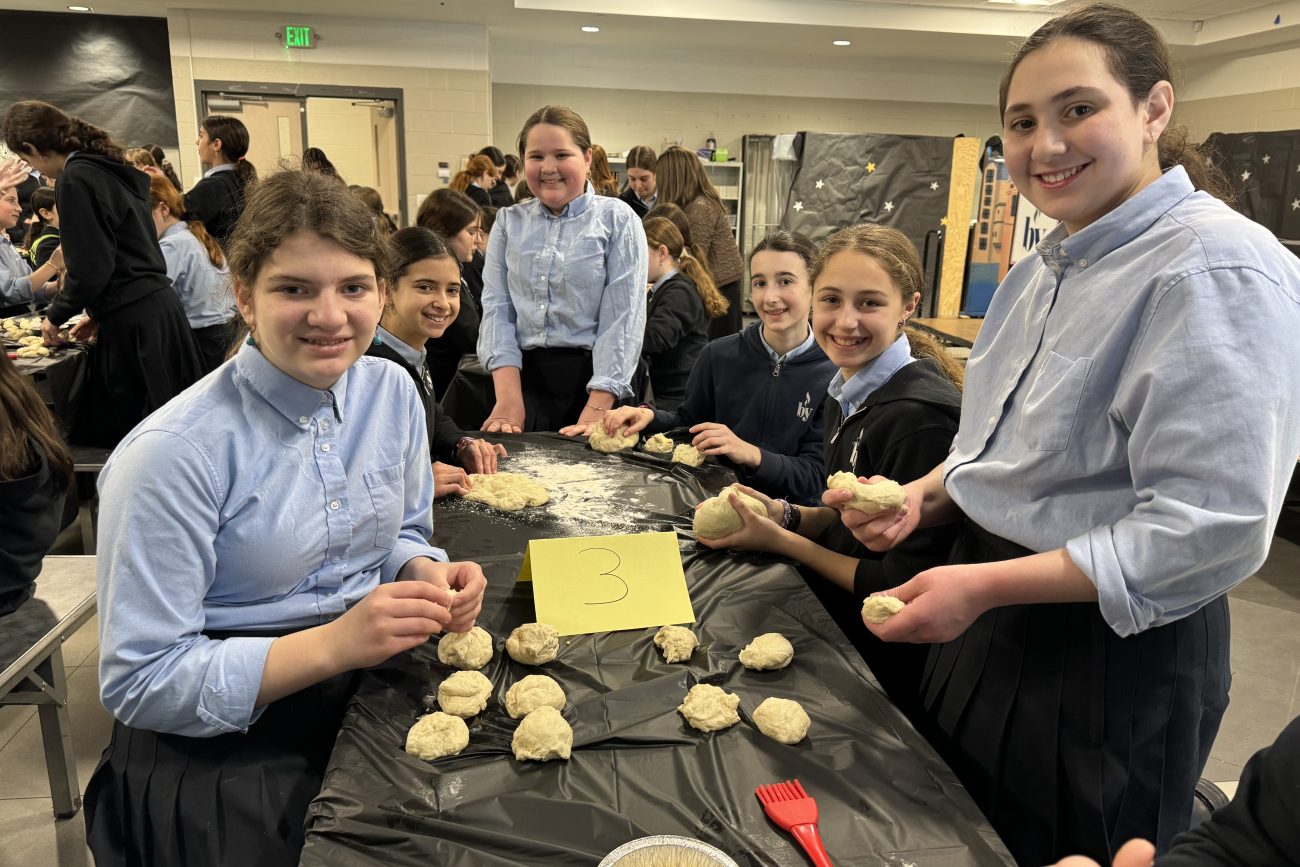
At the end of Parshas Shlach, seventh graders learn about the mitzvah of Challah. For years, students have been baking challah with dough from a bakery, but now, Mrs. Lefkovitz has greatly expanded this program. Twenty mothers each prepared and brought five-pound batches of challah dough. Each mother was assigned approximately ten girls. Together with the students, each mother was mafrish Challah, made the bracha, and said the yehi ratzon. Afterwards girls braided, topped and baked the challos. Then, a panel of two mothers and one grandmother shared insights into the beauty of the mitzvah of Challah. After wrapping them in decorative bags, girls took their freshly baked challah home to enjoy on Shabbos.
“The program was such a rewarding experience,” Mrs. Lefkovitz tells me. “It was a win-win experience for the girls. Not only did they learn about the mitzvah of Challah, but they also did it themselves. We got fantastic feedback from the mothers telling us how much they enjoyed interacting with their daughters and their daughters’ classmates and sharing this beautiful experience with them.”
One mother wrote: “Hi Mrs. Sherman, I just wanted to let you know how much I enjoyed the challah program with the girls. It was so organized and warm and beautiful! The girls were so sweet and happy and involved. The speeches were so nice! I felt so good to be involved. My daughter was so proud to bring home her bag with challah. Thank you so much.”
“It was a wonderful learning experience, especially for those girls whose mothers don’t bake challah at home,” Mrs. Lefkovitz tells me. “Not only that, but the students were inspired – it really touched their neshamos – and hopefully the girls will do this mitzvah when they’re older.”